
← Previous: An elegant formulation, inspired by Bill Gates · Next: A wheel, the same forwards and backwards →
Third article in the series. We have seen that Aboulafia’s tserouf is a precise ordering of all the permutations of a word. Now let us draw it.
How to draw a permutation space
Take all the arrangements of n letters — all n! of them — and place them, in Aboulafia’s order, as points evenly spaced around a circle. This is only possible because Zaks’s ranking and unranking is recursive in n, not in n!: to find where a given word belongs on the circle, we run a short recursion over its n letters — we never have to walk through the astronomical list. Then join each word to its reversal, the same word read back to front. Those are the only chords that matter: drawing them is enough to reveal the whole structure.
Watch what happens as n climbs. Up to six letters the picture is still a sparse tangle of chords — you can almost count them.
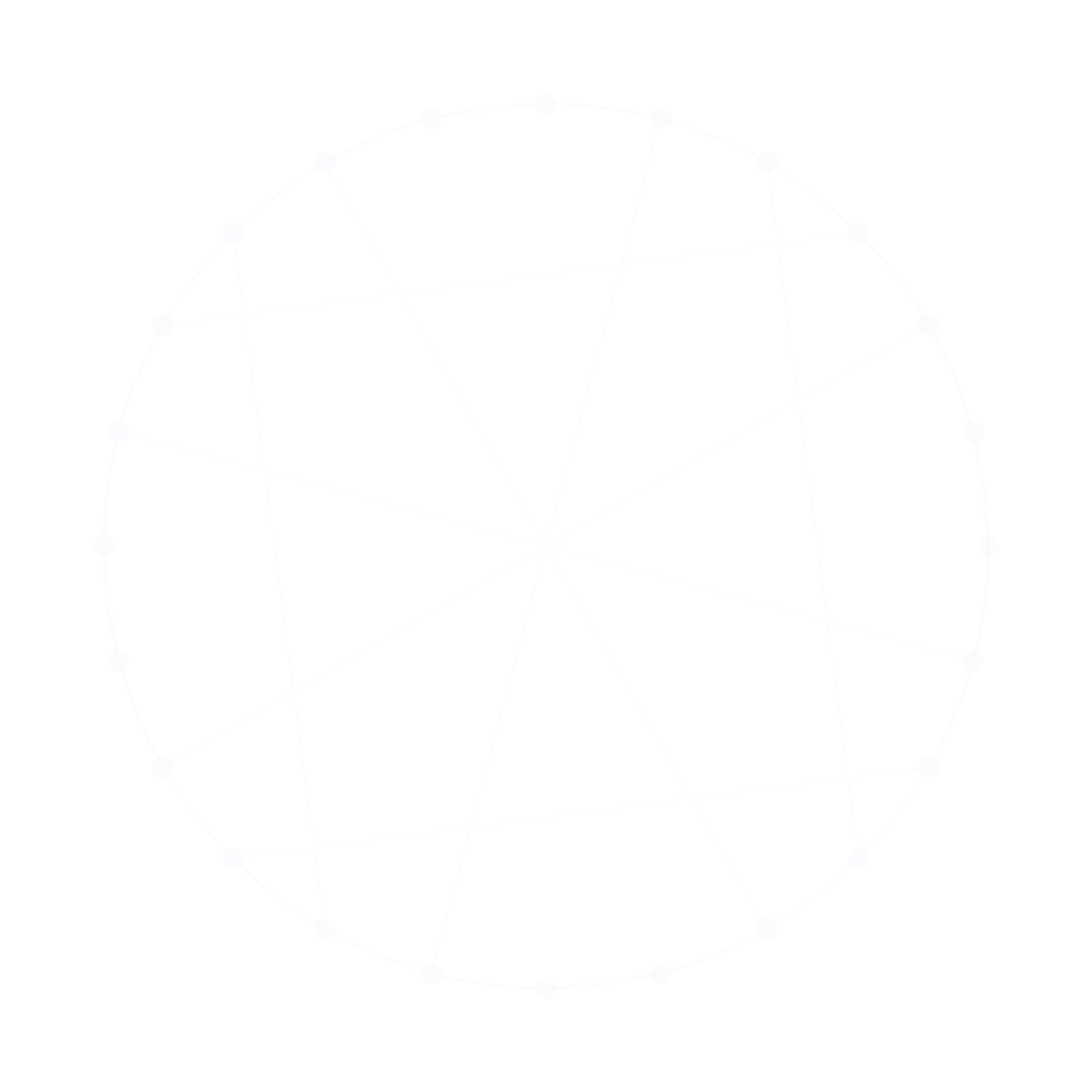
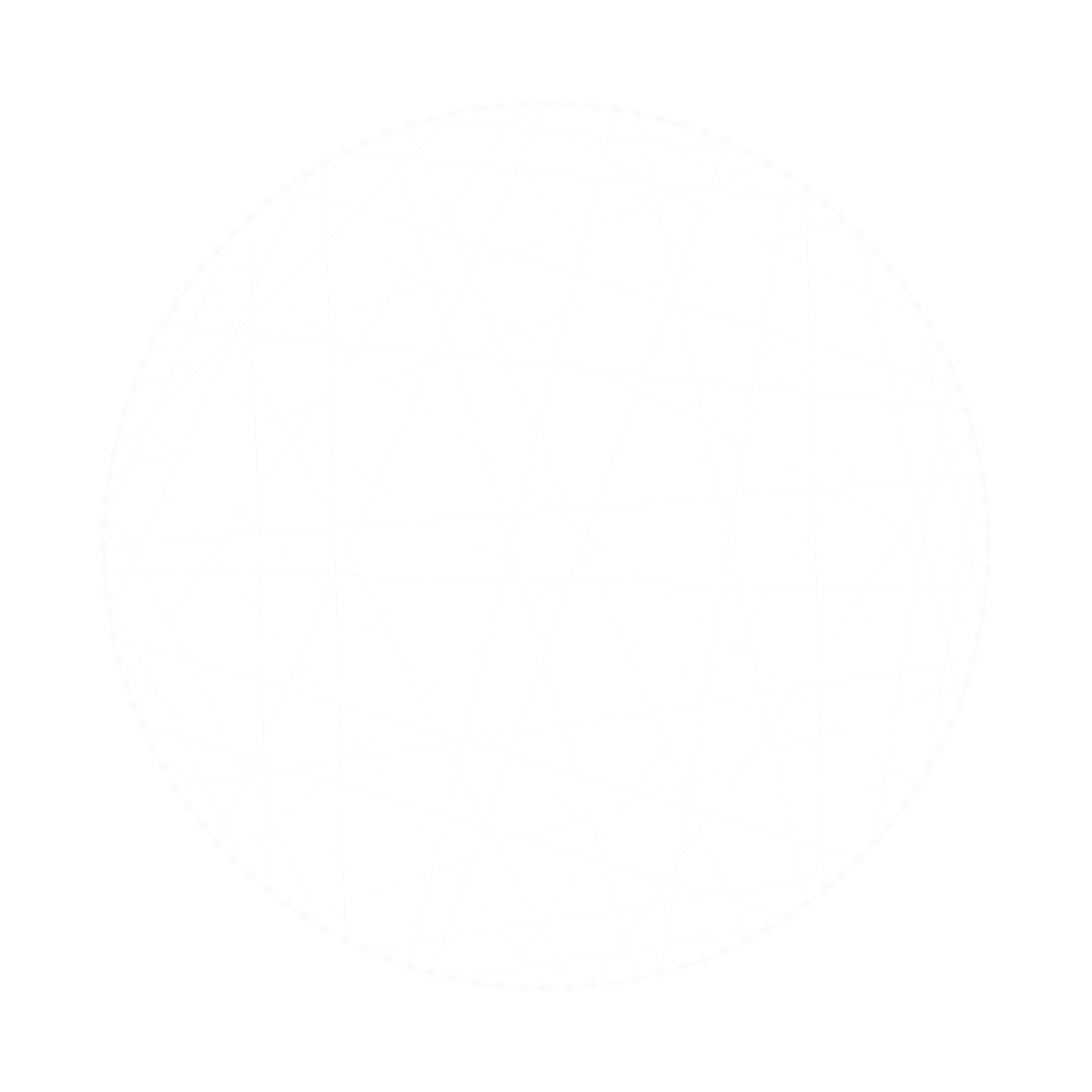
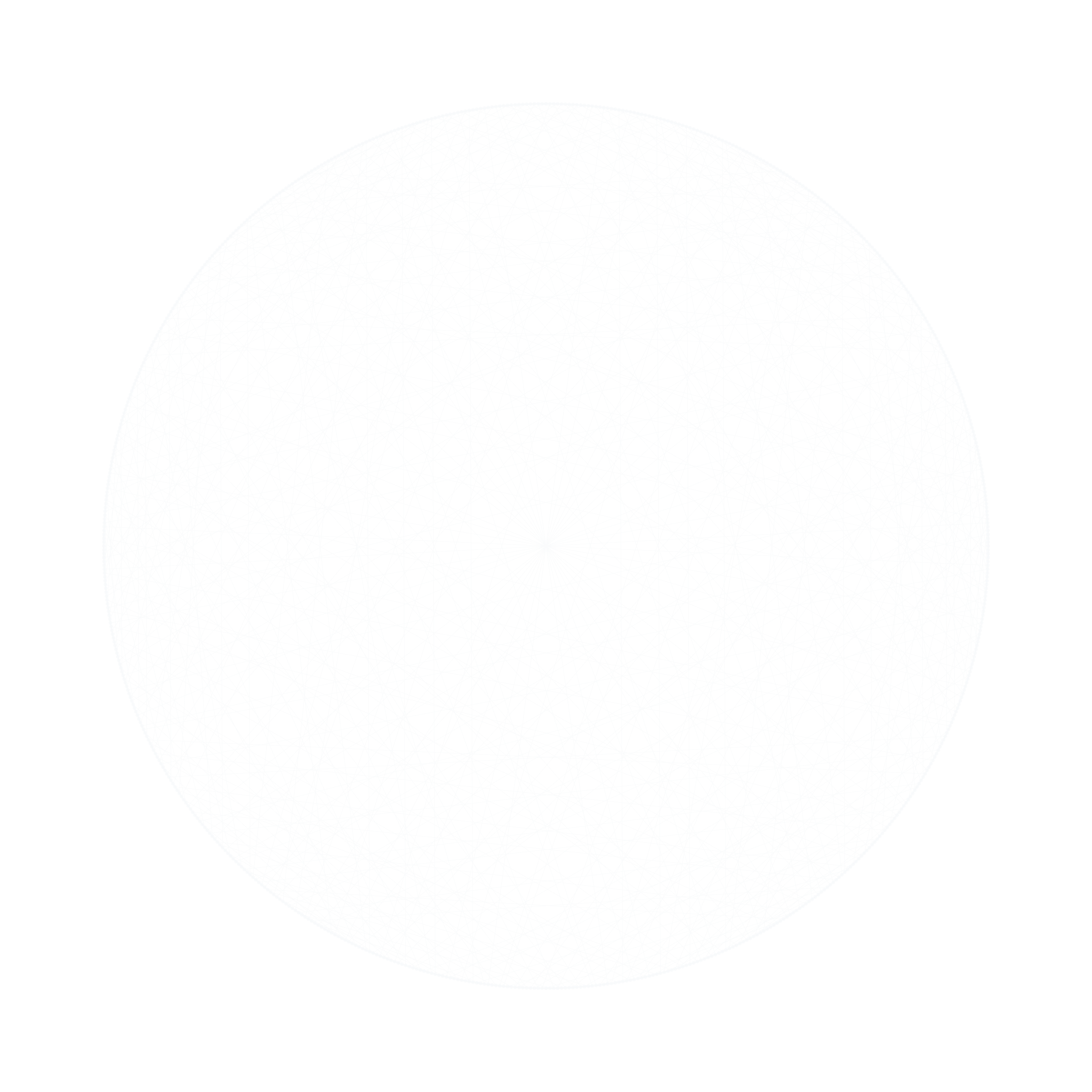
But at seven letters the magic begins: the chords start to organise themselves, all on their own, into a dense, luminous, structured web. New patterns starts to emerge.
Too big to draw yet drawable
The trouble is that n! grows ferociously. At ten letters there are already 3,628,800 arrangements. At sixty letters there are more of them than there are atoms in the observable universe. You cannot draw them all — not even close.
So instead you sample: pick a few hundred thousand arrangements at random, draw each one’s chord to its reversal, and let them accumulate.
This is doable since Zak’s formula is so simple!
You would expect a grey mush. The opposite happens.
Caustics
The chords do not spread evenly. They pile up along smooth, glowing curves — the same phenomenon as the bright cusp of light at the bottom of a coffee cup, where reflected rays bunch together. Mathematicians call such a curve a caustic: the place where a whole family of lines crowds onto a single envelope, and light gathers. The picture is not drawn — it is revealed.
The Tserouf of 42 letters
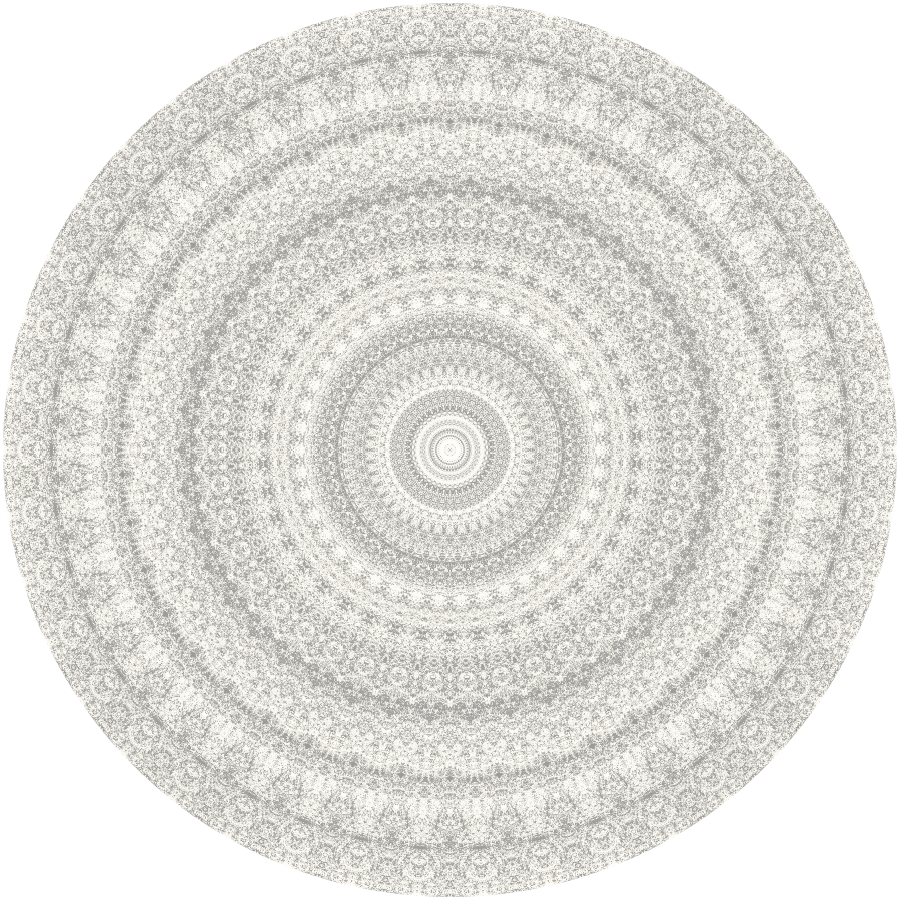
The Tserouf of 42 letters. Its 1.41 × 10⁵¹ permutations could never be drawn — this is just 870,000 of its chords, taken at random.
And you can fall into it. Because Zaks’s ranking and unranking functions let you jump straight to any position without visiting the others, you can zoom in — here 985× — and the same rings return, finer and finer:
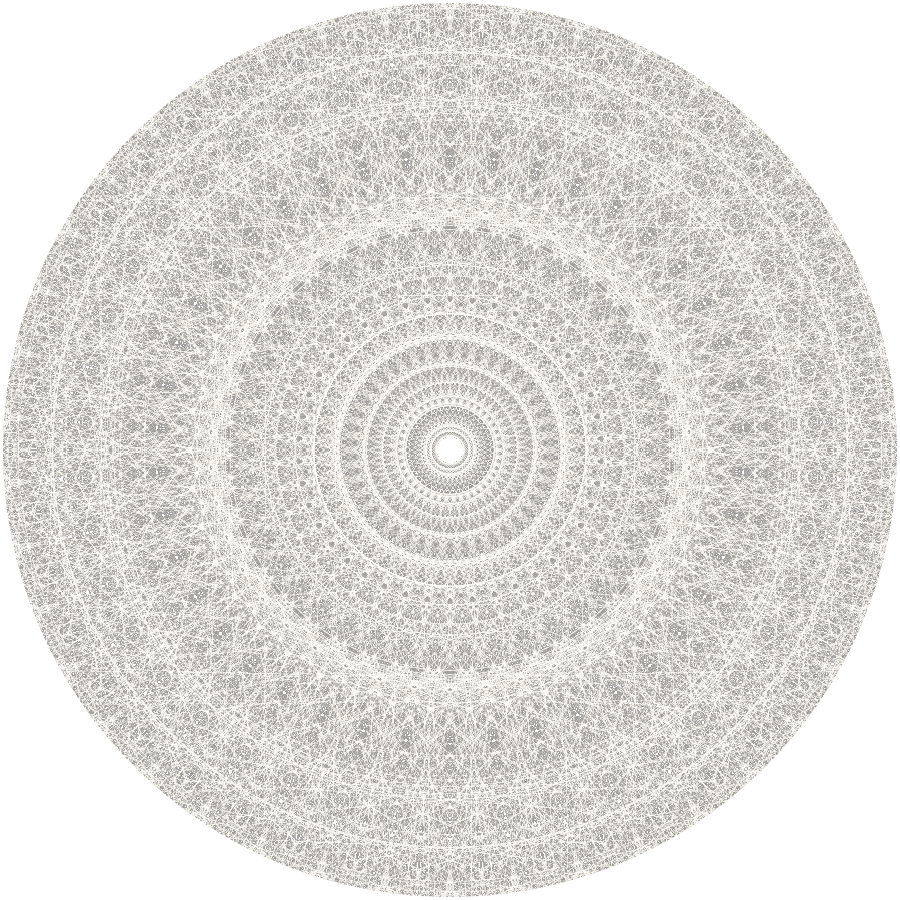
A 985× zoom into the very same figure — the caustics repeat at every scale.
A strict rule — order the words, join each to its reversal — sampled blindly, and out of the randomness rises this. It is a living illustration of what Henri Atlan called the space between crystal and smoke, and of Jacques Monod’s chance and necessity: the apparent chaos is harmonious.
Moreover, the symmetry of the figure grows with the number of letters and it is the symmetry of a mandala and a kaleidoscope.
There is a precise mathematical reason for that, which is the final article.
Images © 2026 Yehonathan Sharvit. Free to share with credit and a link.